
What was capping them
Boltfri is a habit tracker for people who want to break a habit and keep it broken. The brief was clear about the feel. Calm and grown up in a category where most apps are either a streak counter with adverts or a gamified toy. The reference points were Calm, Headspace and Apple Health, not a game. What did not exist was the app.
What we built
A native iPhone app, built in eleven sessions and shipped to TestFlight.
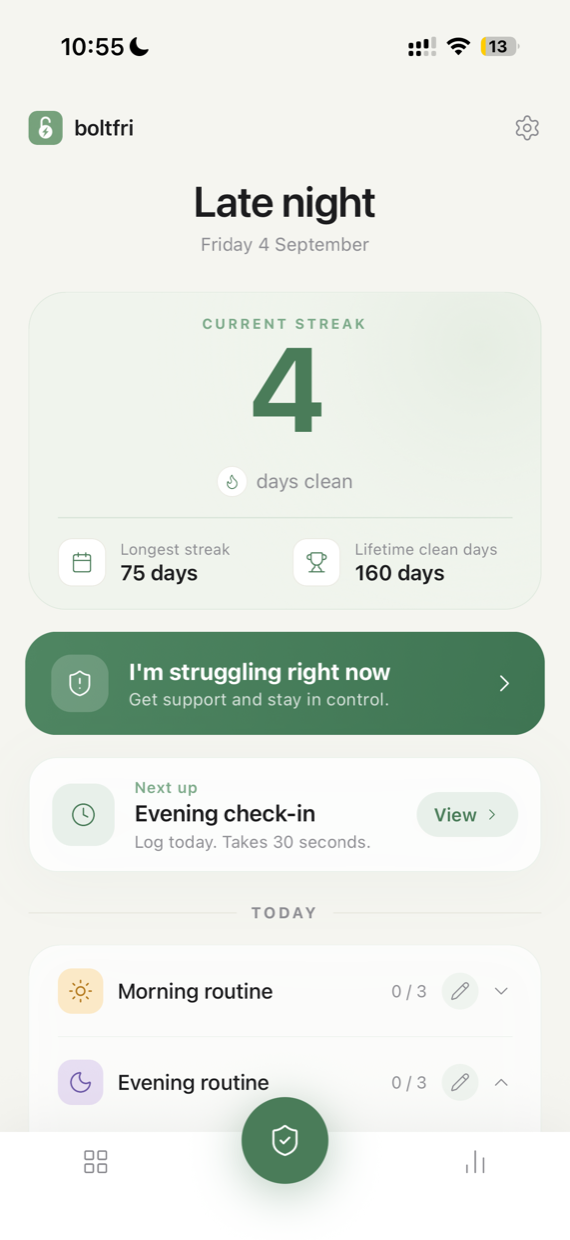
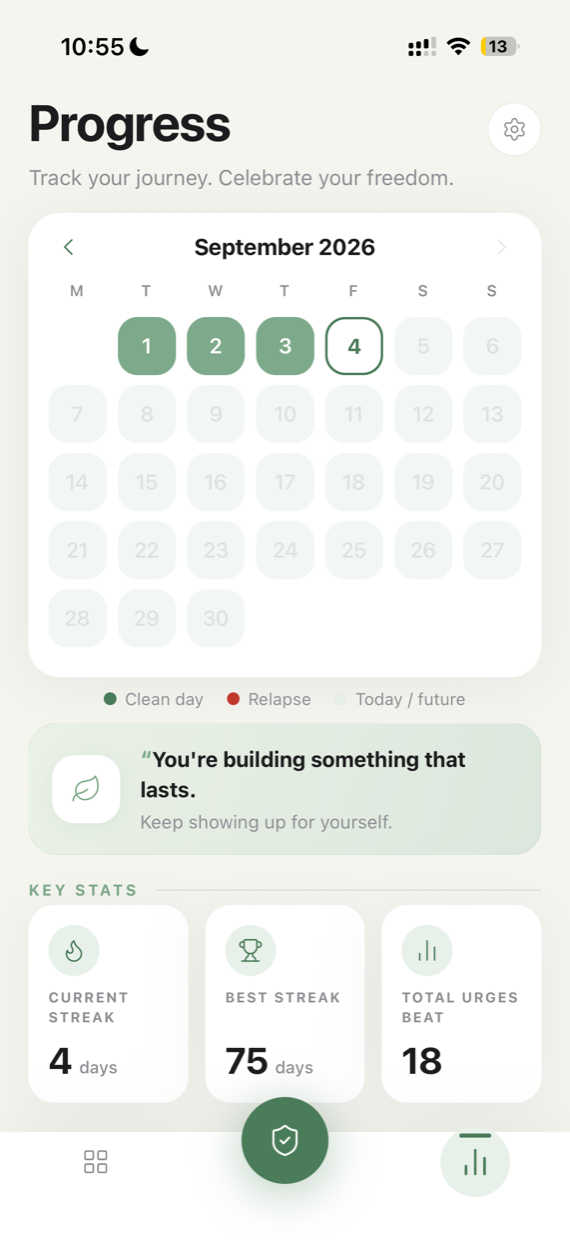
- The daily loop. A streak with real milestones, a longest streak and a lifetime total, morning and evening routines the user can edit, a thirty second evening check-in, a daily lesson from a fourteen day curriculum on how habits actually work, and a journal with prompts that change by weekday.
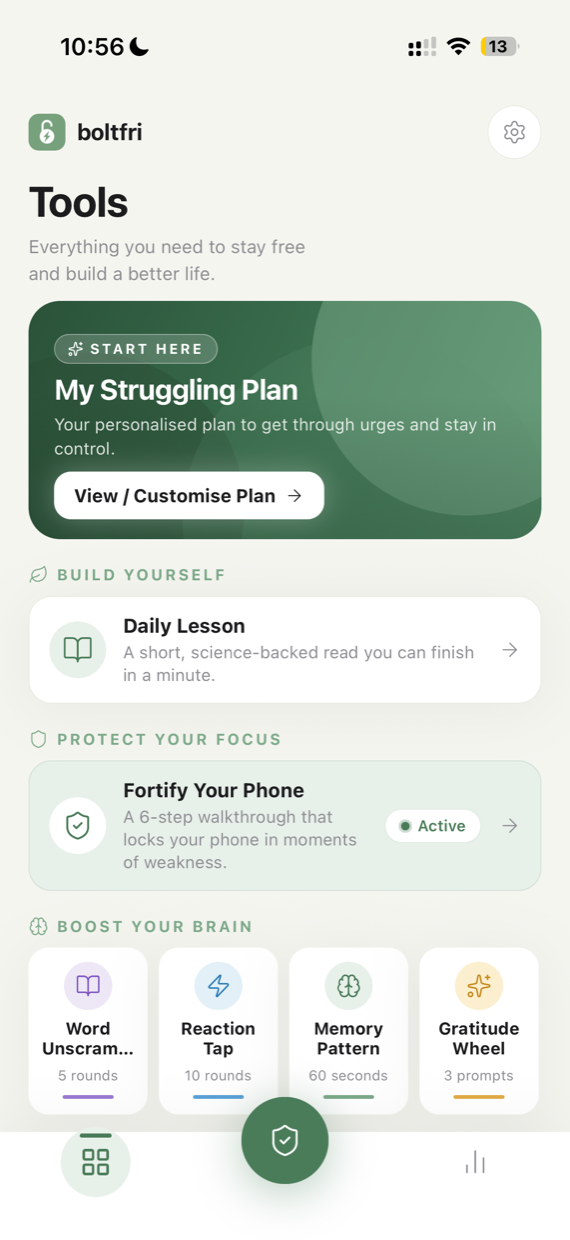
- For the hard moments. A personal plan the user builds in advance and reaches in one tap when a habit pushes back: their own written reasons, a message recorded in their own voice, breathing and soundscapes. A bad day resets the streak without wiping the history or the lifetime total.
- Healthy replacements. Four short focus games, a log of the good things done instead, and check-ins charted over time so progress is visible even when the streak number is not the whole story.
- Phone controls. A guided set up for Apple's own screen time restrictions, walked through step by step inside the app.
Under it, a design system that keeps the whole thing consistent: one file of colour, spacing and type tokens, one icon set at one stroke weight, one haptics service so every tap feels the same, and spring animations with the bounce deliberately tuned out.
The last session was the one nobody sees. The app's backend had quietly been paused and its database turned out to have no tables, so we rebuilt the schema as versioned migrations with proper row level security, wrote a sync engine that backs up thirty kinds of local data with a three way merge so a phone and the cloud can never overwrite each other, and made sign up honest about whether it had actually finished. That went out as TestFlight build 14.
What changed
The idea is now an app that can be handed to a tester. It works fully offline, backs itself up when it can, and every screen holds to the same quiet standard. The remaining work is a device pass and the App Store listing, not the product.