
What was capping them
Epic Life Watersports run paddling out of Sussex. They already had an app on TestFlight and real paddlers using it: sessions logged, club challenges running, everyone able to see where they stood.
The problem was not the app. The problem was that they could not change it.
It had been built on a no-code platform, and the only source anybody could recover was an export from seven months earlier. Features had shipped in that gap that existed nowhere in the code. The data model was whatever the builder had produced rather than one anybody had designed. Every change they wanted next ran into the same wall, and so did every developer they might have handed it to.
What we built
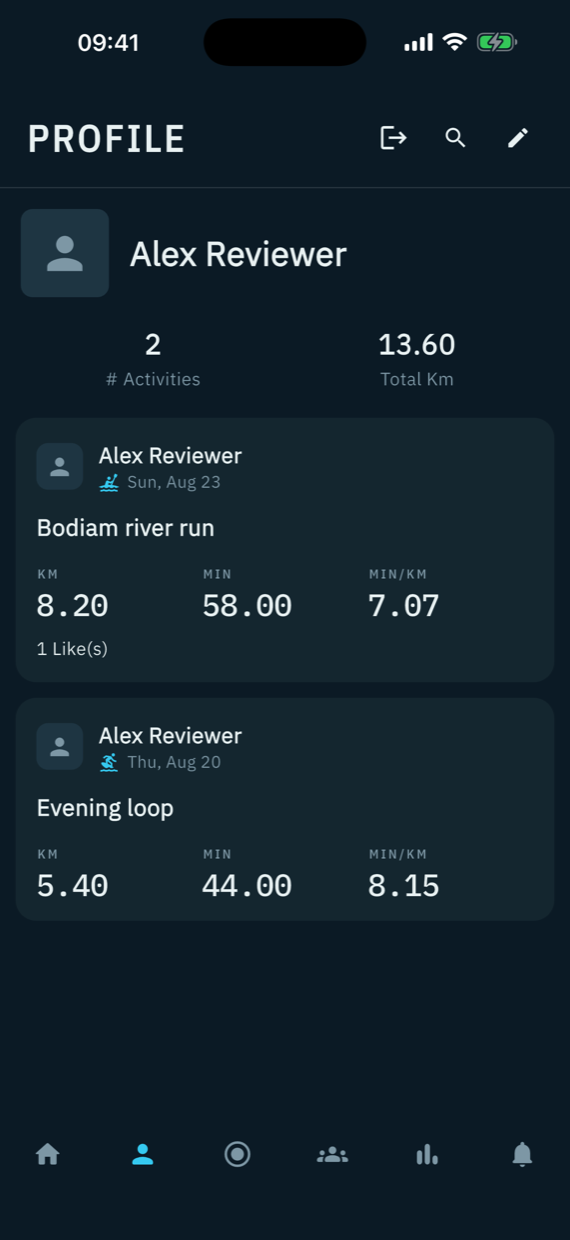
A custom iOS app, written from nothing, with the app they already had as the specification.
Underneath it, a relational database designed around how a paddling club actually works, so challenge standings are worked out from the paddles themselves rather than cached in a number that can drift out of step. On top of it, the things a no-code builder was never going to give them:
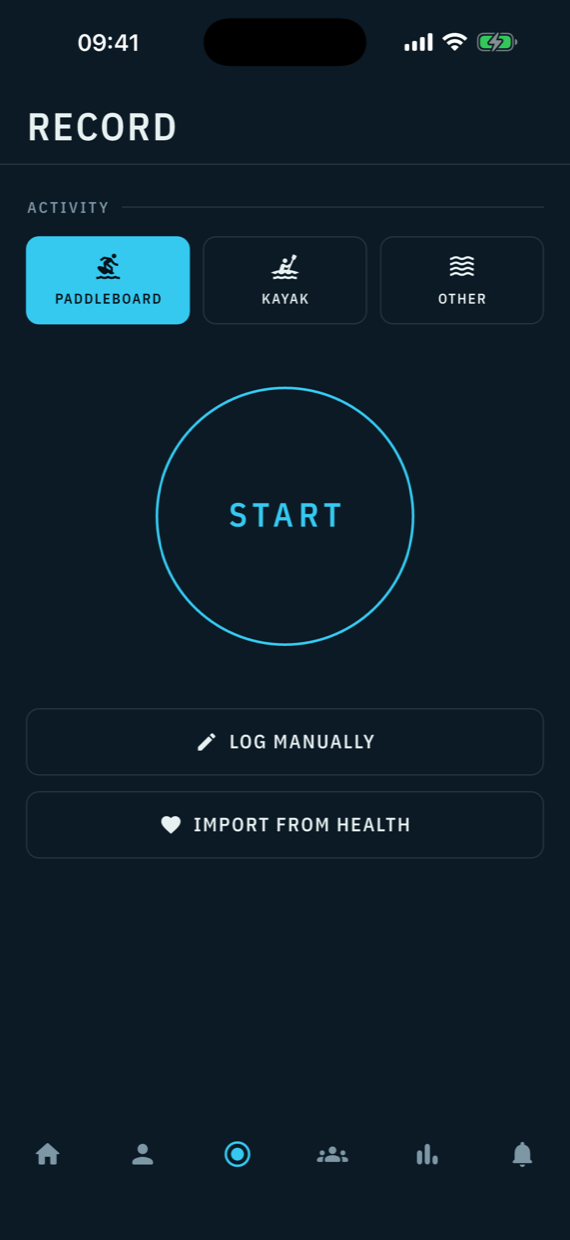
- Live GPS tracking. Start a paddle and the app follows the route, filtering out the drift a phone reports while you sit still, so ninety minutes on the water does not add up four kilometres you never paddled.
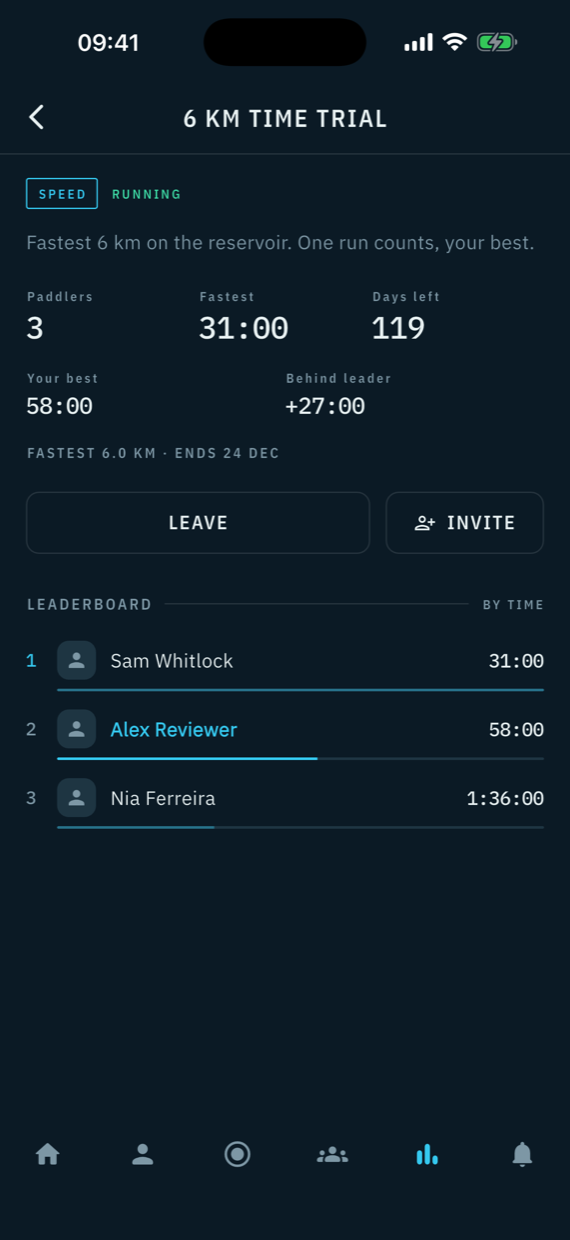
- Challenges that settle it two ways. Total distance, or the fastest single effort over a set distance, which is what a club time trial actually is.
- Apple Health import, matched against what is already there, so the same workout can never land twice.
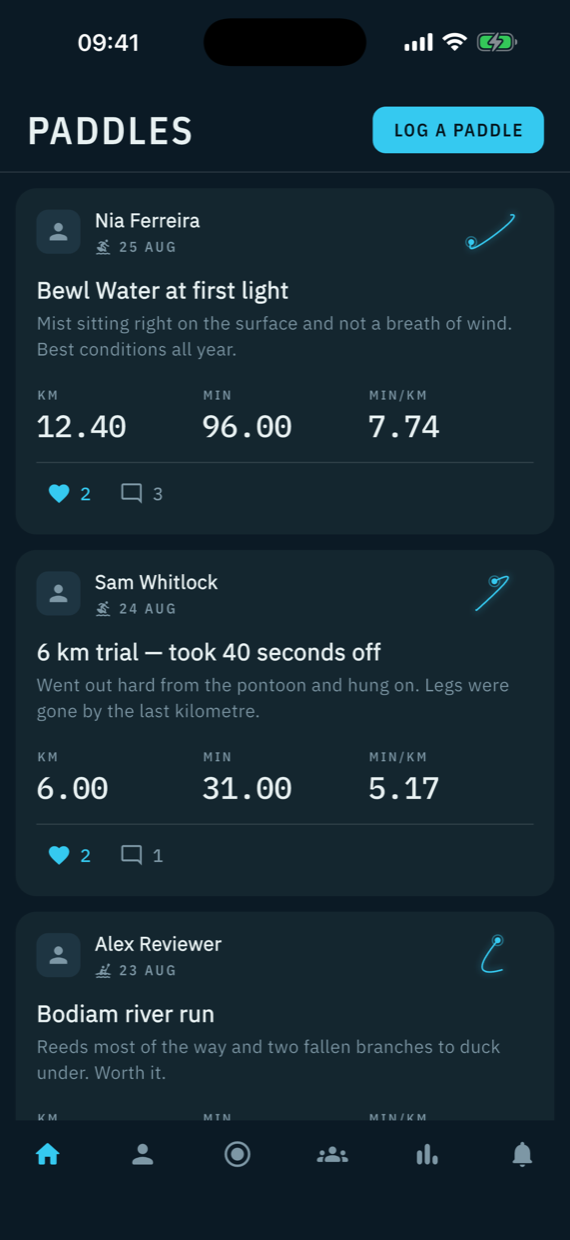
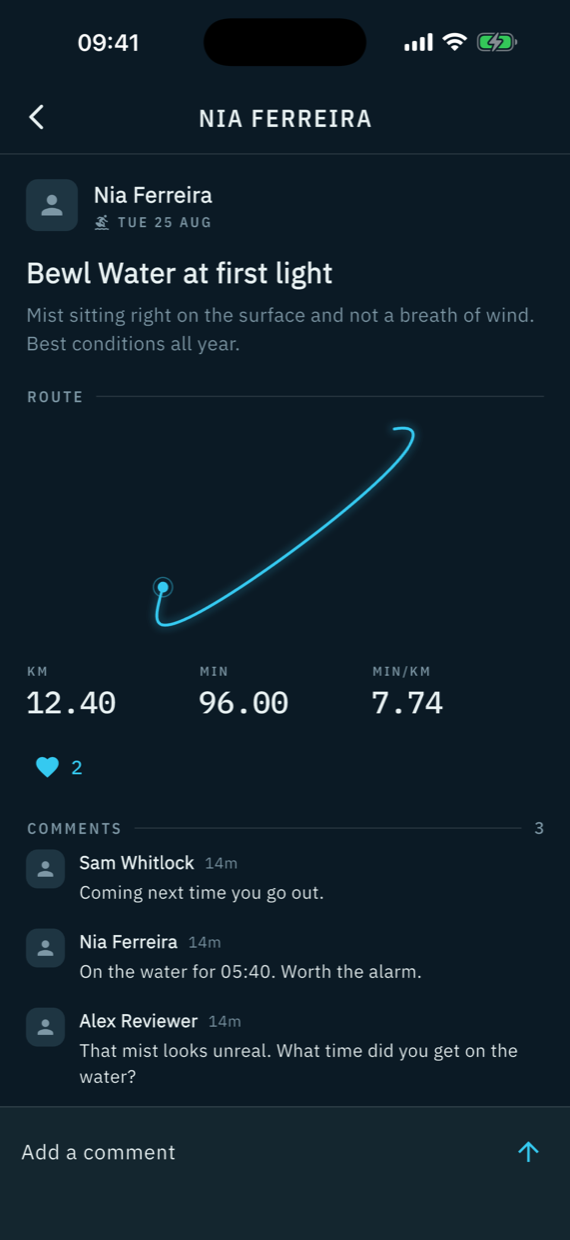
- Clubs, a feed, comments and photos, so it is somewhere people come back to rather than a logbook.
Then a look of its own: a deep blue-green ground because English water reads green rather than navy, one bright accent carrying every active state, and a paddle blade over its own wake as the app icon.
The signature element is the paddle's route, drawn as a single line on every post and live on the record screen as you go. It is built from real GPS, so a paddle with no track draws nothing rather than inventing a shape.
How long it took
The first commit was at half past five in the evening. By eleven that night the app was building for submission, and the next morning finished the App Store screenshots and confirmed the final change against the live backend.
That speed is not corner-cutting, it is the order of the work. The database was designed and tested before a single screen existed, and the GPS maths was written so it could be tested off the phone. By the time the screens were built, everything underneath them was already known to be right.
We also told them what not to ship. An app with public posts and comments needs reporting, blocking and moderation before Apple will pass it, which is another day's work. Sending it without would have bought a rejection and a delay.
What changed
They have gone from an app nobody could touch to one they own outright: a database designed for their sport, code any developer can open and read, and a brand that came out of the subject instead of a template. The next change they want is a conversation, not a wall.