
What was capping us
We build for local businesses in Hastings and East Sussex, so we need to know which ones are worth a conversation. Doing that properly is slow. Find them on Google Maps. Open the website and look for the signs of a business that has outgrown its admin. Check the company is real and active on Companies House. Note it all down, then start calling. The research took an afternoon a town, and the call list lived in a spreadsheet that fell out of date the moment two people were dialling from it.
What we built
Two halves in one small tool.
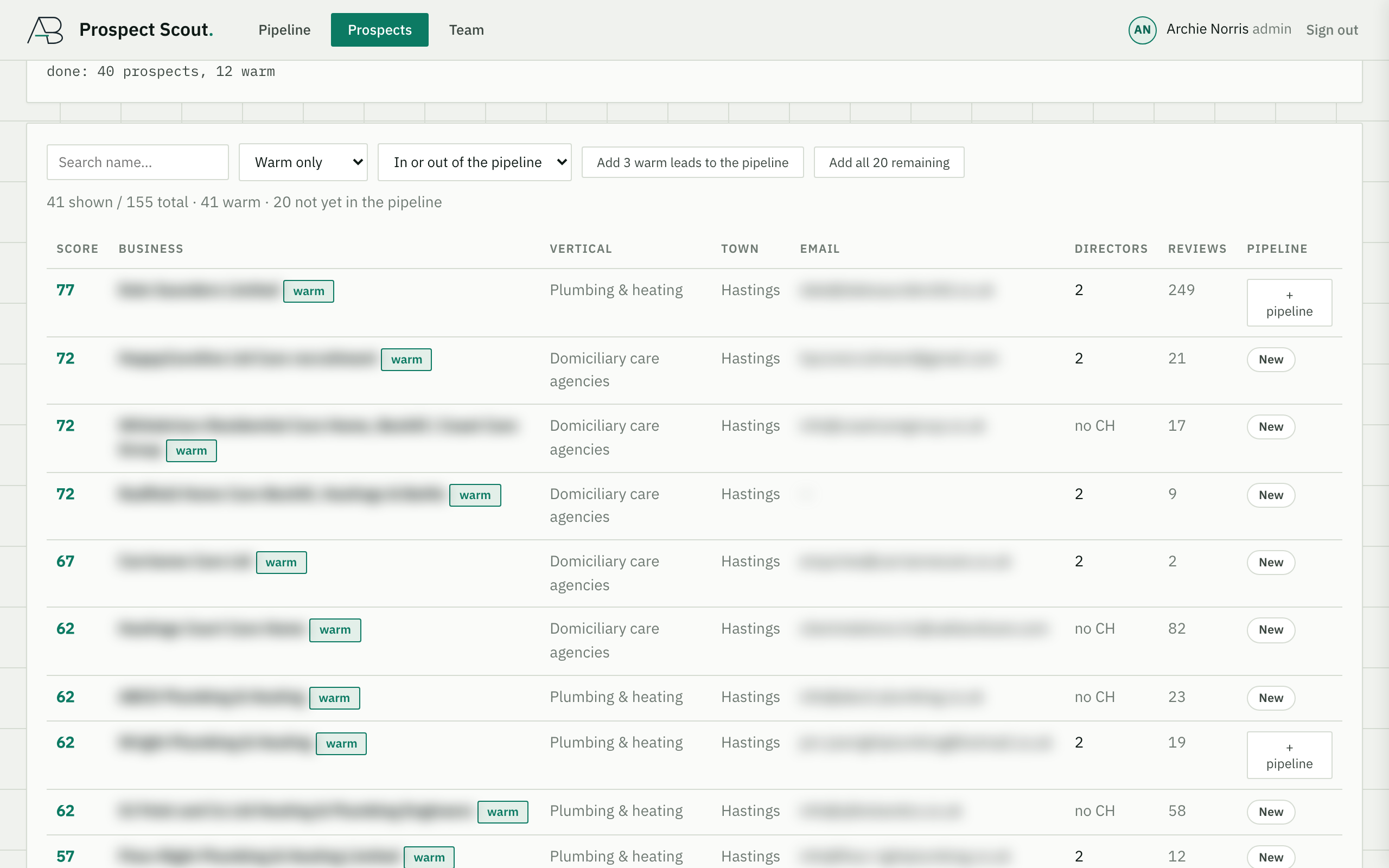
Research. Pick a town and a vertical. Prospect Scout pulls every listing from Google Maps, crawls each website for contact details and for the signals we care about, matches the business against Companies House to confirm it is incorporated and active, and scores it. Every score comes with its reasons written out, so a person can see why a business is warm rather than trust a number. Businesses with no website, in excluded categories or dissolved at Companies House are dropped. Businesses we cannot match are flagged so nobody cold emails an individual by mistake.
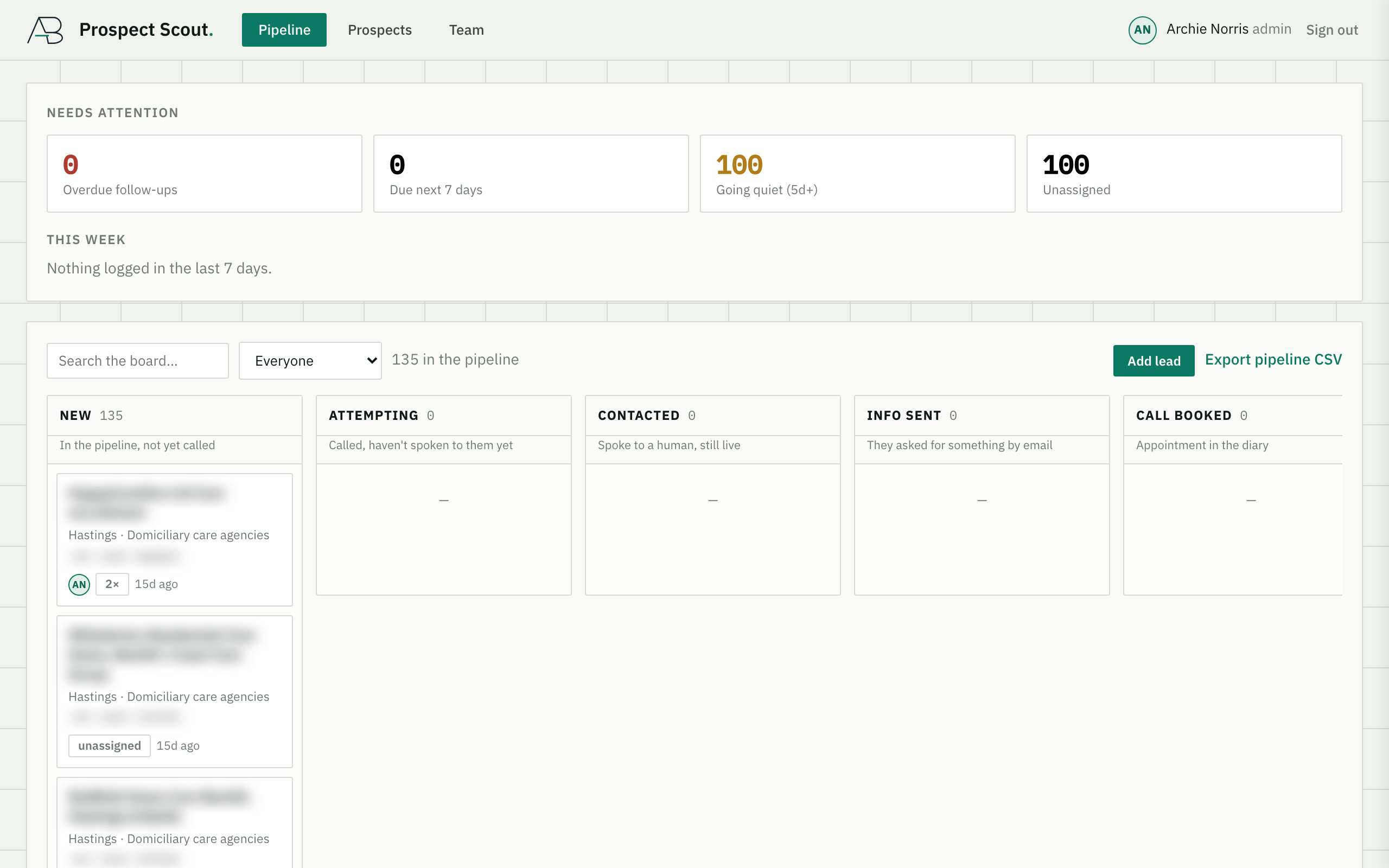
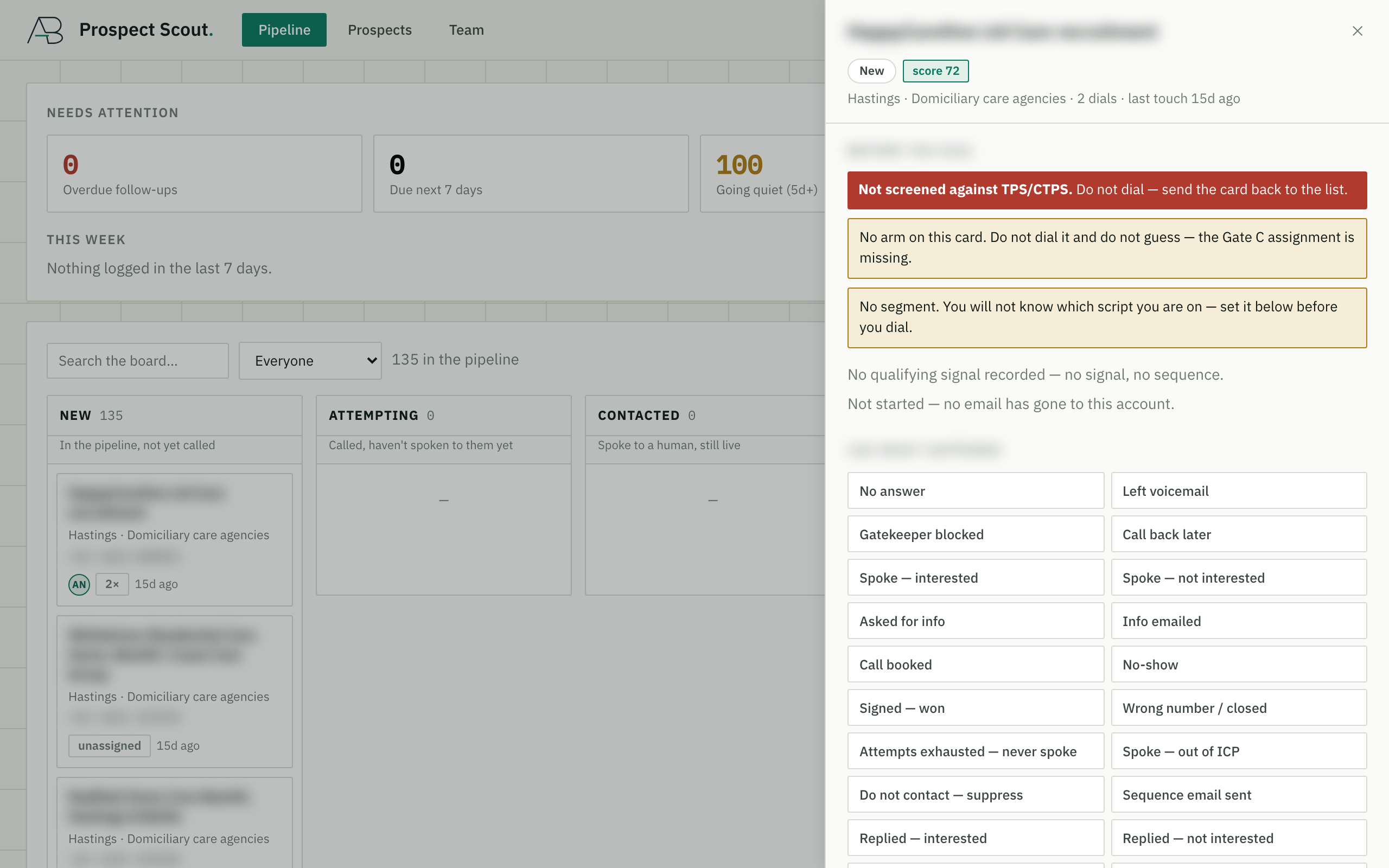
Pipeline. The warm ones go onto a drag and drop board the team calls from: New, Attempting, Contacted, Info Sent, Call Booked, Won or Lost. One tap logs an outcome, moves the card and stamps the timeline, so the history of a lead can never drift away from where the card sits. A needs attention panel shows the manager what is overdue, what is going quiet and what has no owner, and a scoreboard shows the week's dials.
It runs on Vercel and Supabase with no third party packages at all, so there is nothing to upgrade and nothing to break.
What changed
Researching a town is a button rather than an afternoon. The first run put 135 verified, scored businesses on the board with their reasons attached, out of 155 researched. The calling list is now the system of record, shared by everyone, with every call and note in one timeline, so the question "has anyone spoken to them?" has an answer.