What was capping them
Gorringe's runs more than fifty auctions a year from Lewes, and every one of them starts with somebody deciding to sell. That decision arrives as an enquiry: an email with three blurry photographs of a watch, a web form that says "some paintings, quite old", a phone call taken by whoever was nearest.
The house had specialists for seventeen departments and no single place where those enquiries lived. A jewellery enquiry might sit in a general inbox for a week before a jewellery specialist saw it. Two people could reply to the same person. A request for a hallmark photograph went out, the client never sent it, and nobody remembered to ask again. When the marketing budget was being discussed, nobody could say which channel produced the enquiries that actually turned into consigned lots, as opposed to the ones that produced the most form fills.
None of it was anybody's fault. It was the shape of the tooling: email is where enquiries arrive, and email has no idea what an enquiry is.
What we built
A single platform that owns the enquiry from the moment it is submitted to the moment it is consigned or declined. Gorringe's staff sign in to a Gorringe's branded dashboard; the software behind it is never mentioned to their clients.
The form on their website
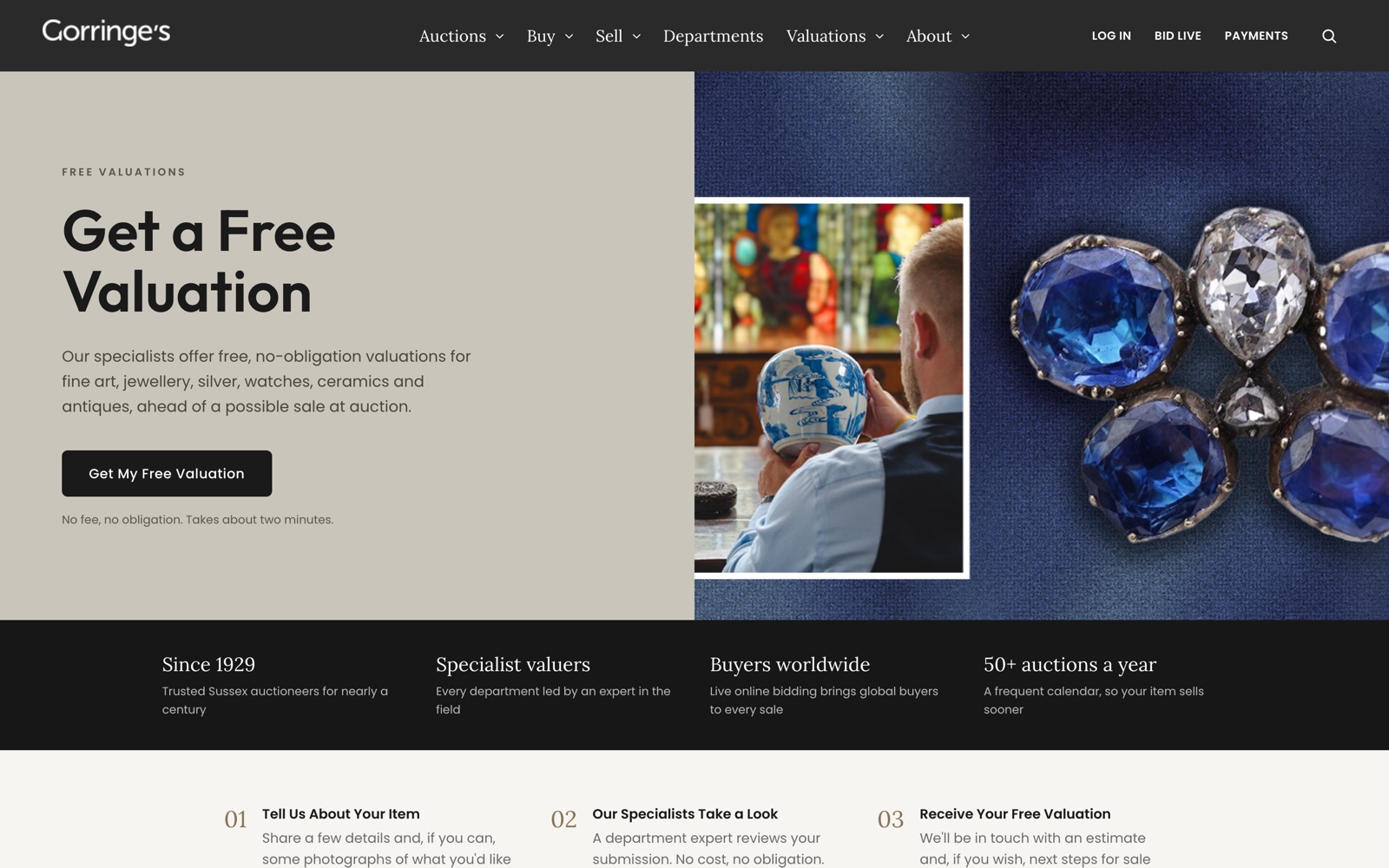
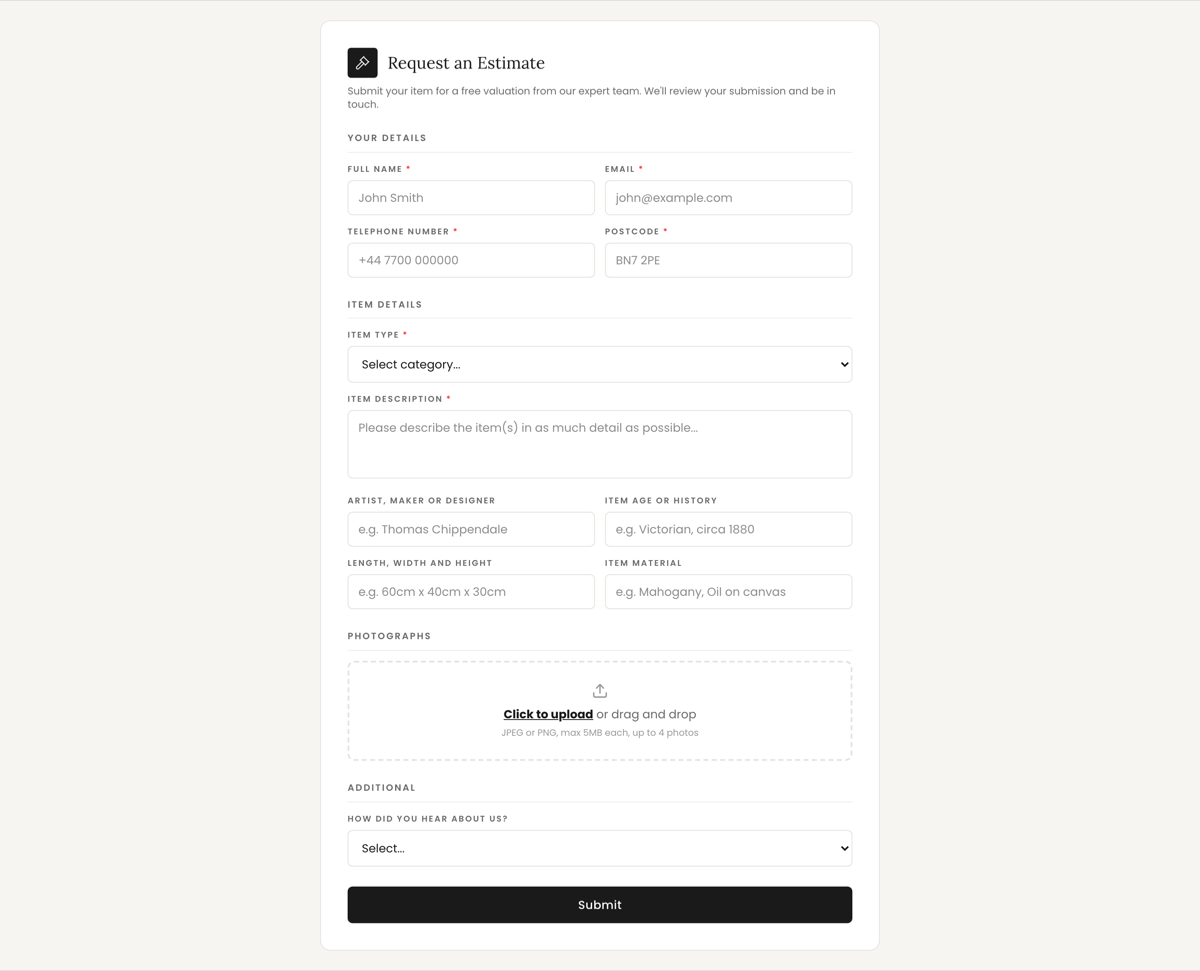
The old form was replaced by an embeddable widget that drops onto any page of gorringes.co.uk with one script tag. It asks the right questions for an auction house: what the item is, who made it, how old, how big, what it is made of, and up to four photographs uploaded straight from a phone. It quietly captures where the visitor came from, down to the individual Google Ads click.
The house controls every field, label and colour from a settings page. It can also show its own live average response time on the form, which is the kind of promise you only make when the system behind it can keep it.
An inbox that reads the enquiry first
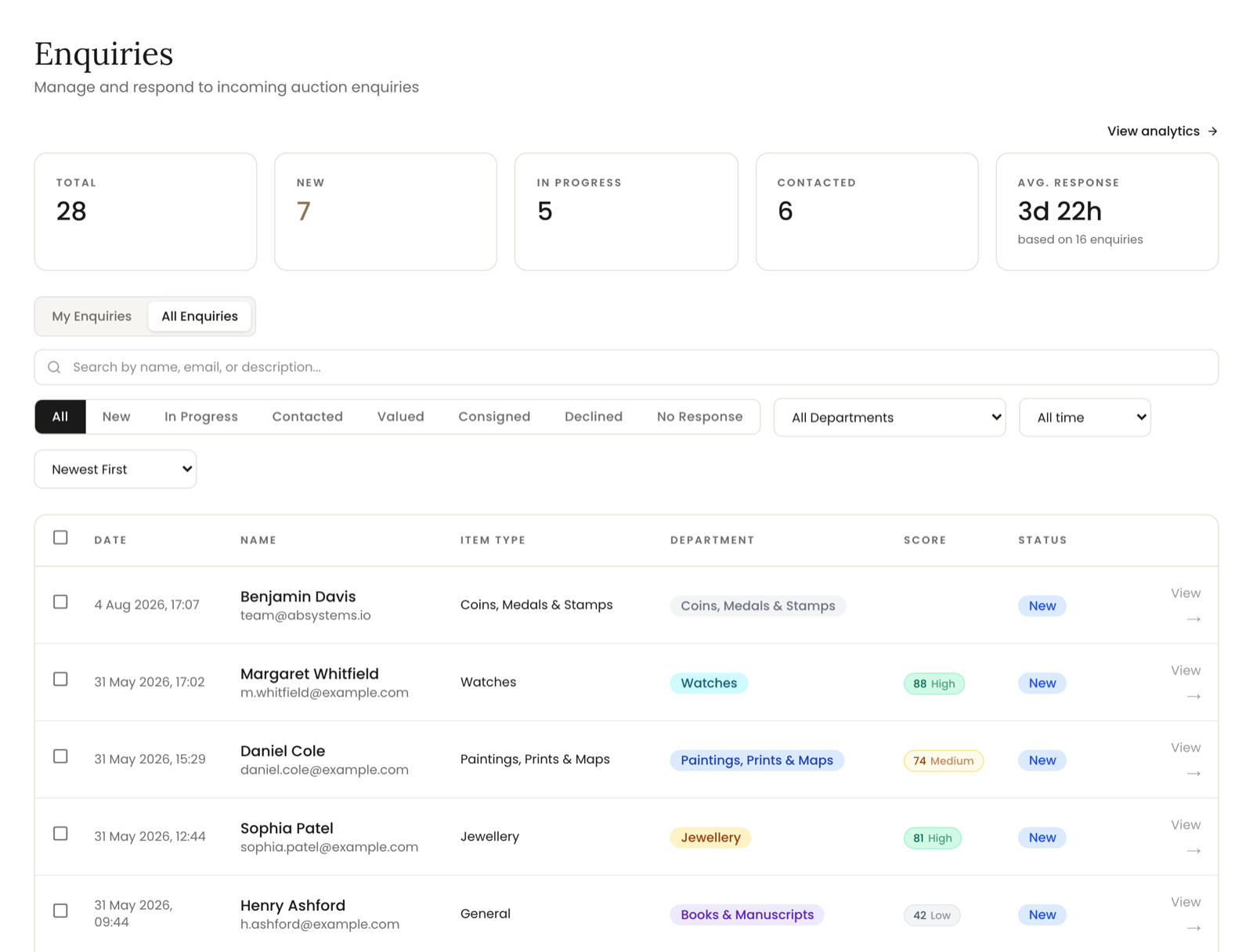
The moment an enquiry lands, Claude reads it. Two things come back within a couple of seconds.
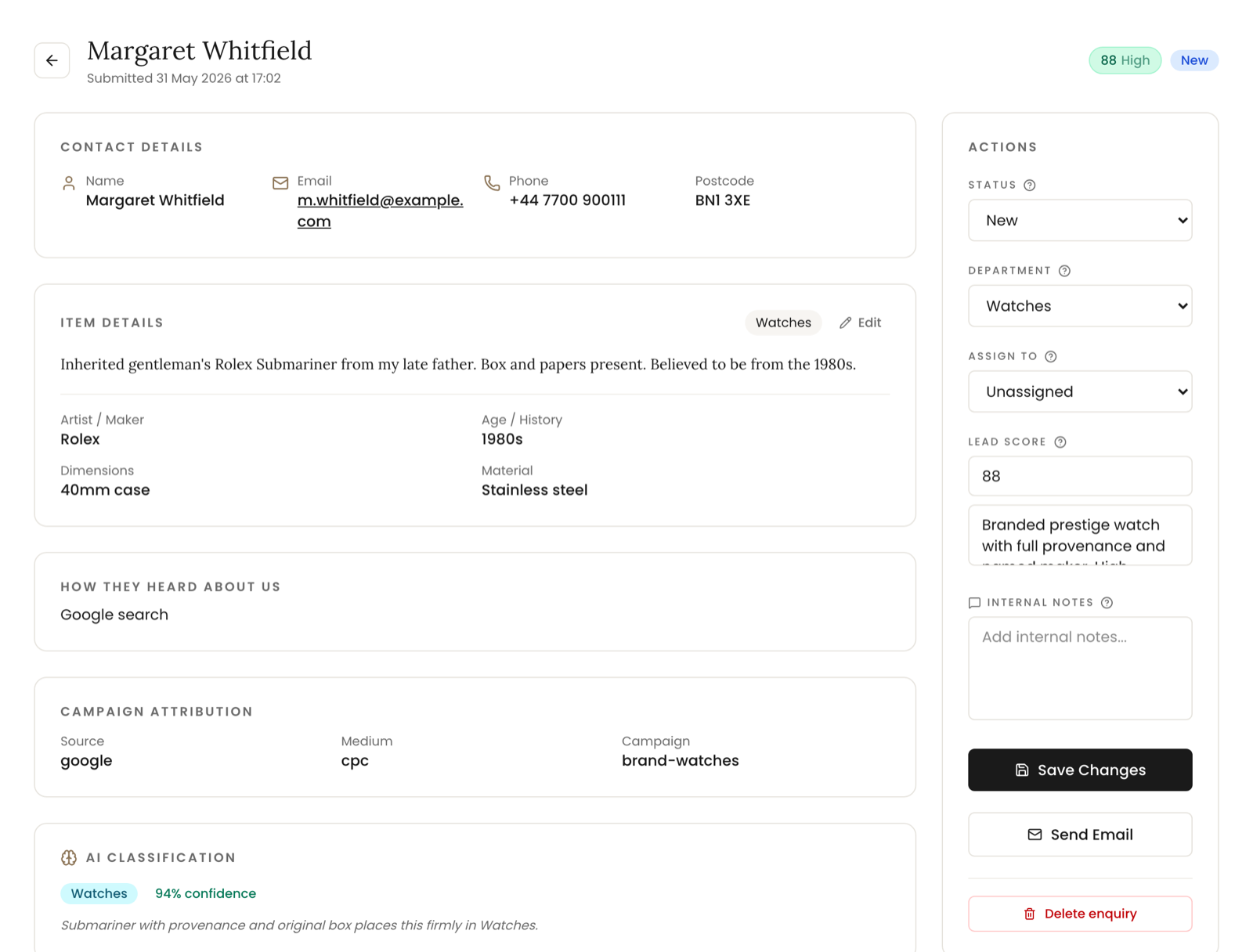
The first is a department. A Rolex Submariner with box and papers goes to Watches; an oil seascape "possibly Newlyn school" goes to Paintings, Prints & Maps. The AI states its confidence and a one-line reason, and the specialists in that department are emailed. Anything it cannot place goes to a named fallback person rather than into a void.
The second is a lead score out of a hundred, with the reasoning written underneath it. A detailed description with a named maker, dimensions and photographs scores high. Four words and no picture scores low. Padding a form with "n/a" and "unknown" is treated as leaving it blank, so a nonsense submission cannot outrank a short but genuine one. Sorting the inbox by score and filtering to New is the morning triage list.
Gorringe's can tune the scoring with a plain-English note about what the house wants more of, and a specialist who knows something the form does not can override any score by hand.
Working an enquiry
Every enquiry has one page. Contact details, the item, the photographs, where it came from, the AI's verdict, and an actions panel: stage, department, assignee, score, internal notes.
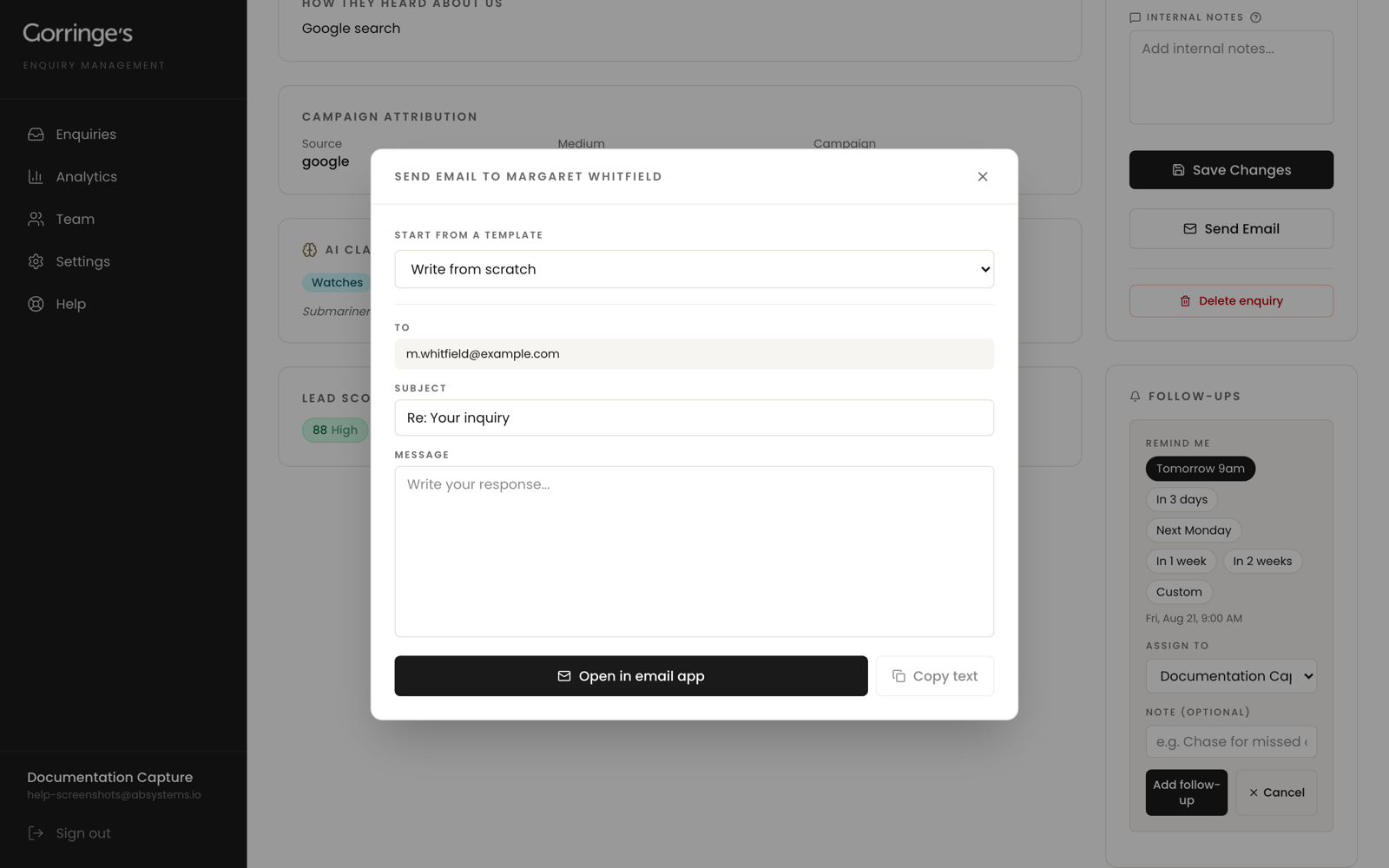
Replies are sent from the enquiry, from Gorringe's own domain, starting from a template or from a draft Claude writes from the enquiry itself. Sending one moves the enquiry to Contacted automatically. A follow-up can be set on the same screen, owned by a named person, so the enquiry that is waiting on a photograph comes back to somebody instead of going quiet.
Every change is logged: who moved what, when, and what it was before.
A status page for the consignor
Each client gets a private page showing where their item has got to, in plain language, updated automatically as the enquiry moves through the pipeline. "Received", "Specialist in touch", "Accepted for auction". The page carries none of the internal apparatus: no scores, no reasoning, no notes. It exists so that "any news on my painting?" stops being an email somebody has to answer.
Analytics, and a loop back into Google Ads
The dashboard reports volume against the previous period, the average and median time to first reply, a stage-by-stage funnel, an estimate of what the pipeline is worth at the house's commission rate, and which channels produce enquiries that get consigned rather than merely enquiries.
The response-time figure counts enquiries nobody has replied to yet, measured from arrival to now. Leaving them out would mean the number improved the longer something was ignored.
The last piece closes a loop that most auction houses never close. Out of the box, Google Ads is told the same thing about every enquiry: a form was filled in. A time-waster and a house clearance full of silver look identical to it, so it bids for whichever clicks produce the most form fills. The platform sends each enquiry's score back to Google as a conversion value, seconds after submission, with no personal data attached. Google's bidding shifts towards the searches that produce items worth selling.
How long it took
The first commit was on a Thursday. Nine days later the inbox was live, with AI routing, lead scoring, custom forms and response-time tracking. Invite codes, team management, department routing and email notifications followed in the same fortnight.
Everything since has been built in daily use with the house, a feature at a time: photographs on the enquiry, bulk actions, the consignor portal, templates and AI drafts, follow-ups, per-valuer analytics, the Google Ads loop, and a help section written for the people using it rather than for us.
What changed
Every enquiry now lands in front of the right specialist, already read, already scored, with a reason attached. Nothing is re-typed. Nothing is answered twice, and nothing goes quiet without a named person being reminded. The house can see, in one place, how quickly it is replying and which channels are bringing in items worth selling. And the marketing budget is being steered by the quality of the enquiries it produces, not the count.